If you have installed a solar system with batteries, or are still planning to, you naturally expect the battery to reliably store energy and provide a steady supply in the evening, at night, or on winter days.
In practice, however, things can look different, and a fast-draining battery can make you nervous and leave you with the feeling that something "isn't right."
The truth is, a battery very rarely fails suddenly. Much more often, behind it sits a combination of consumption, weather conditions, or system settings. The good news is that these causes are easy to recognise, and even easier to prevent.
That is why it's important to understand what affects battery capacity and how to operate the system so that the battery lasts long, stably and predictably, even in the most demanding winter conditions.
Why does a solar battery drain quickly?
The most common reason for a battery draining quickly is simple: it didn't get charged enough during the day.
In winter, this is entirely normal, the days are short, solar radiation is weak, and the panels produce up to 3 to 4 times less energy than in summer.
If the battery enters the night at 40 to 60% capacity, it's entirely expected that it will drain faster. That is not a sign of a bad battery, just a sign that it didn't receive enough input energy.
To prevent this, it is important to learn how to optimise consumption during sunny periods, give the battery priority for charging, and avoid the habit of switching on large loads just before dark.
Fast battery drain due to heavy evening and night-time consumption
Beyond the battery perhaps not being charged enough during the day, the second most common reason is unjustifiably high consumption.
The battery is ideal for base loads:
- Refrigerator
- Lighting
- Pump
- Electronics
- Router and TV
However, large loads that users accidentally connect to the battery, water heater, electric heaters, storage heaters, or air conditioning, drain the battery in an hour or two.
That is not a sign that it is broken; it is simply a signal that the load is too high. To prevent sudden drain, at night use only low-consumption devices and switch on large loads while the panels are producing energy.
Battery capacity and household needs
There are situations where the battery simply isn't big enough. If a household uses a lot of energy in the evening or on weekends, a small capacity drains too quickly, even when everything is technically in order.
It is important that the battery capacity matches the household's actual consumption. Otherwise it drains too fast simply because there isn't enough energy for your lifestyle.
To avoid the battery draining too fast, you can expand its capacity with additional modules or optimise consumption to match the system size.
Fast battery drain due to worn-out or damaged batteries
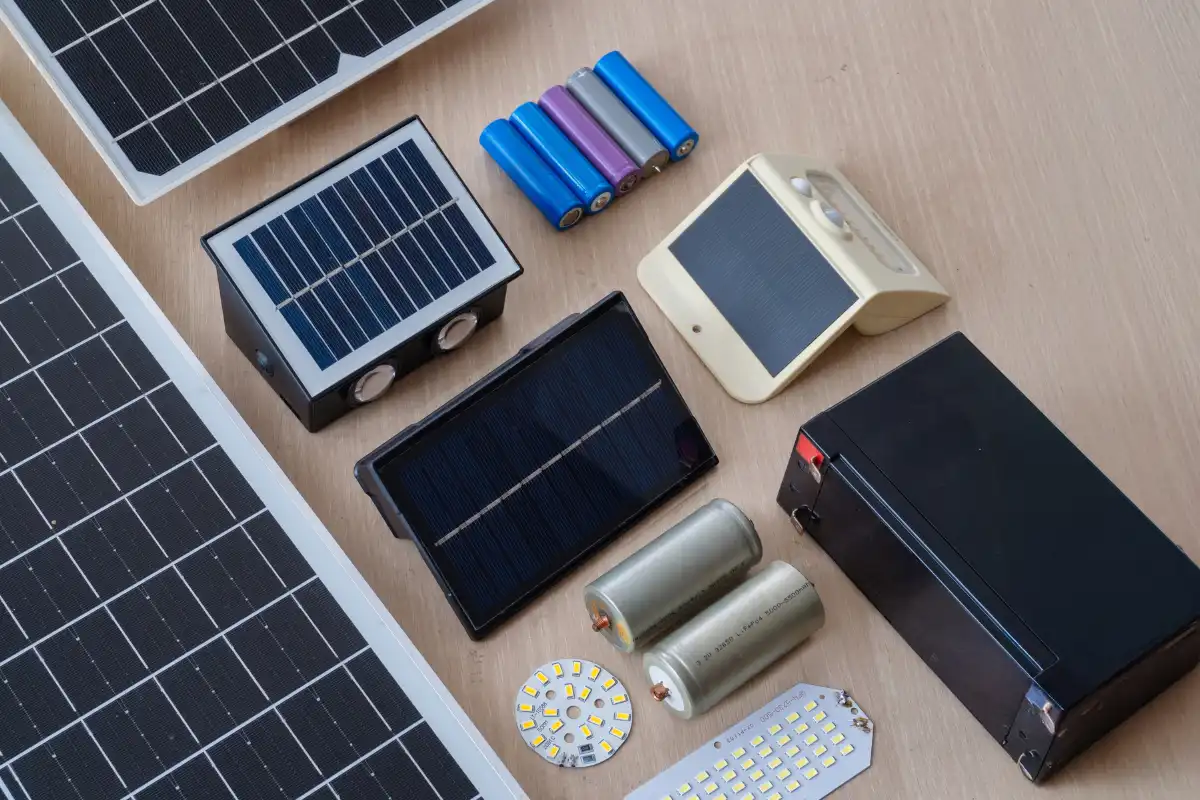
Every battery has a service life. Lead-acid batteries (GEL, AGM) age faster and lose capacity, while lithium batteries have a long service life, more stable performance, and a much greater depth of discharge.
If you notice that the battery starts to drain unusually fast, even with normal consumption, it may simply be worn out.
To prevent this and extend the battery's lifespan, periodically check the state of health, cell balance and BMS operation, and plan in advance when it is time to replace it.
Fast drain due to poor inverter or BMS settings
Sometimes the battery isn't to blame, the culprit is the electronics that manage charging and discharging. If the BMS is poorly configured or the inverter is running in the wrong mode, the battery can drain faster than it should, or fail to charge fully.
This often happens after a power outage, a reset, or mismatched parameters. To resolve this, leave the job to a professional who will configure the system properly, update the software, and verify all parameters responsible for charging and discharging.
Battery drain and energy losses in cables and connections
If the wiring is not ideal, cables too thin, too long, or poorly connected, voltage drop can occur.
That means the battery is actually sending out more energy than the devices consume, which the user perceives as "too fast a drain."
To avoid this, check the installation regularly, replace bad connections, and use cables of the appropriate cross-section and length.
How to prevent fast battery drain and extend its service life
Stable battery operation is achieved through a combination of correct charging, balanced consumption, and regular maintenance.
To summarise, ideally you should:
- run larger loads while the sun is shining
- keep night-time consumption to a minimum
- avoid draining the battery too deeply
- periodically check the inverter and BMS parameters
- service the battery and monitor it through the monitoring app
Keep in mind that a battery lasts longest when it runs in stable, moderate cycles, without sharp swings.
A fast-draining battery is usually not a defect, it is a signal that the system needs to be approached from a different angle, slightly better adjusted, optimised, or that your consumption needs to be tweaked.
Once we understand how the battery works and what affects its operation, it becomes clear that most of these problems can be resolved easily, quickly, and without major expense.