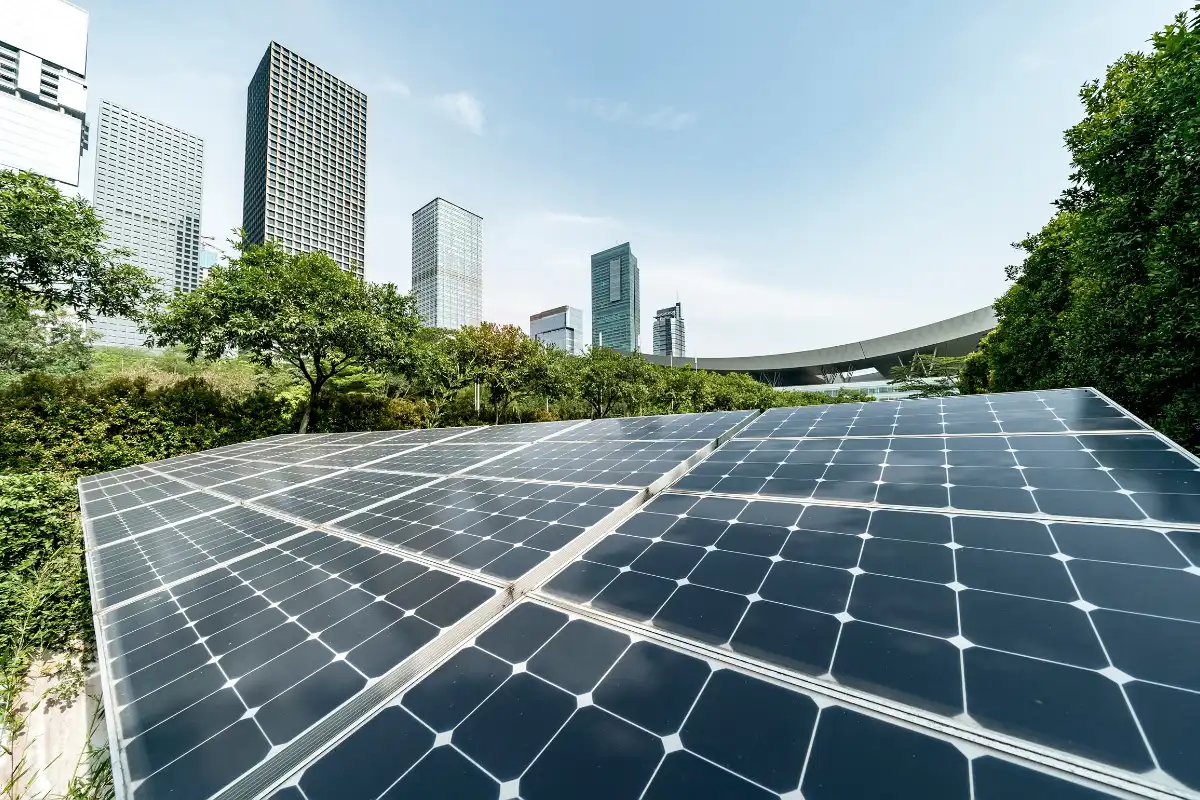
Renewable energy sources represent the future of our planet, and although wind farms currently generate the most renewable electricity, the solar industry is developing at lightning speed.
Carbon dioxide emissions have been at their peak for years, and Europe's leading countries have united in the aim of reaching net-zero CO₂ emissions by 2050. Solar energy sources are one of the most significant allies on this journey.
In this article, we'll walk you through all the ways the sun's radiation can be used to produce electricity or thermal energy, what the benefits are, and how you can already today fully replace your existing supply methods with efficient, reliable, and in the long run healthier options, in the form of solar panels and solar collectors. We'll clarify the terminology and resolve the question of whether "solar panels" and "solar thermal collectors" are the same thing.
What is solar energy?
In the simplest terms, solar energy is the thermal and light energy that comes from the star closest to our planet, the Sun. Given the source it comes from, solar energy is available in unlimited quantities. That means we cannot use it up, unlike energy that comes from fossil fuels (coal, oil, gas).
Approximately 30% of the Sun's total energy is reflected back into space, while the rest is absorbed by clouds, oceans, and land. To understand how powerful solar radiation is, consider that the energy it emits in one hour is greater than the energy the entire world's population uses in a year.
In addition to being renewable, solar energy is also ecologically superior to other forms of energy production, because it doesn't emit carbon dioxide and has no impact on climate change.
What are solar panels?
A solar panel is a specialised device consisting of an array of smaller segments, solar cells. Solar cells are most often made of silicon. They absorb solar energy and, through the photovoltaic effect, convert it into electricity.
The Sun's energy is the source of life on Earth, so it was most natural to find ways to convert this inexhaustible and powerful energy into electricity or thermal energy that can supply both the largest industry and individual households.
This was finally enabled by the production of solar panels. When the Sun's energy meets the silicon in solar cells, electrons are released and set in motion, meaning a current is formed, which is then directed via conductors in the solar panels to the end consumers.
Since the electricity generated in solar panels is direct current, and households most often use alternating current, a special device, an inverter, is used to convert direct current into alternating current. To optimise this entire process, solar panels are installed in places most exposed to the sun throughout the day, typically the roofs of houses, buildings, or commercial properties.
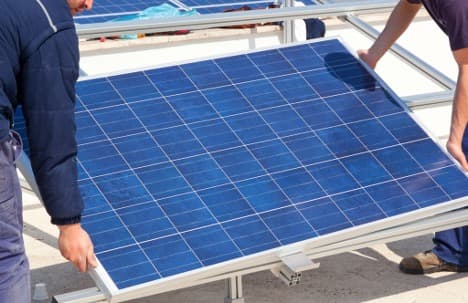
What are solar collectors (solar plates)?
In Serbian everyday speech, the terms "solarni paneli" (solar panels) and "solarne ploče" (solar plates / collectors) are used as synonyms. There is, however, a certain difference. While solar panels are used exclusively for producing electricity, "solarne ploče" refers to producing both electricity and thermal energy.
There are two basic types of "solar plates":
-
Photovoltaic solar plates (solar panels), where solar radiation is used to produce electricity.
-
Solar thermal collectors, thanks to which solar energy is used to produce thermal energy, that is, for heating water or rooms.
"Solar plates" is therefore a somewhat broader term that also refers to solar panels, while "solar panels" refers exclusively to the use of solar radiation for producing electricity.
Do solar panels emit radiation?
Recently, whenever solar energy comes up in any context, the question of harmful radiation tends to arise. We've already said that all life on Earth as we know it is only possible thanks to the Sun's thermal and light energy.
On the other hand, the high level of pollution and the ever-growing ecological crisis we are witnessing damage the ozone layer and thereby contribute to the phenomenon of global warming, and to a more intense impact of solar radiation on us.
These are all reasons that justify caution when people talk about the use of solar radiation for producing electricity or thermal energy. To dispel any scepticism about solar panel radiation, we need to distinguish between two types of radiation:
-
ionising radiation, harmful radiation that can damage tissues, coming from sources such as nuclear reactors and radioactive elements.
-
electromagnetic radiation, what solar panels emit; it is generated on the panel surface and is at a very low frequency, even lower than the one produced by our televisions and computers, and is harmless to human health.
There was also concern about the potential carcinogenicity of the materials solar panels are made from. However, modern solar panels are built with silicon, which is entirely natural and harmless to the human body, it is also used in the production of sand, glass, and other materials that have long been in widespread use.
Finally, numerous studies have been conducted on the impact of low-frequency electromagnetic radiation on human health, around 25,000 scientific papers have been published, examining and confirming the safety of solar panel use.

In conclusion
Planet Earth is in an ecological crisis, global warming is intensifying every year, and the climate picture is changing from season to season. Humanity has had to find new ways of producing energy that will be renewable, efficient, and ecologically safest.
Using solar energy to produce electricity is one of the most important developments in our recent history. Although the idea dates back much further, only now are we experiencing its full expansion. We are witnessing ever wider use of solar systems in both industry and households.
This is not just an ecologically important alternative, it is also economically more cost-effective and more accessible, given that it comes from an inexhaustible, natural, and free source: the Sun.
If you're considering switching to solar energy supply, get informed about all the benefits that come with it and take part in the energy and ecological revolution that solar systems bring.