At a time when electricity and fuel costs are jumping and environmental awareness keeps growing, solar water heating is becoming one of the smartest solutions out there.
For all the needs of a household, a hospitality venue, a greenhouse, a pool, or any larger body of water, the best way to heat water is solar energy, which can provide you with hot water all year round, at minimal cost.
Read on for a detailed explanation of how solar systems work when it comes to heating water, what types exist for this purpose, where they are most often used, and how much you can really save.
Where do you need water heating?
Solar water heating systems are not just for households. Here are the most common locations and properties where reliable and efficient water heating is needed:
1. Family homes and apartments
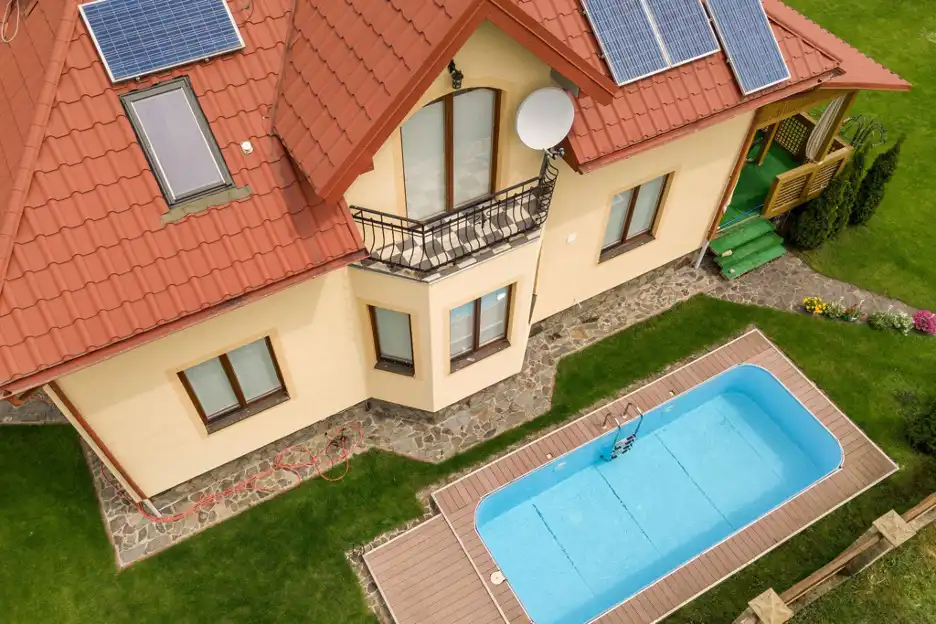
Hot water for bathing, washing dishes, laundry, and household needs makes up about 20 to 30% of total household energy consumption. Solar water heating for the complete needs of a single household can significantly reduce electricity bills and provide you with full comfort, especially when it comes to households with a pool or multiple water heaters.
2. Holiday homes and off-grid properties
Buildings in rural and mountain areas often have no access to the urban network or gas. Solar water heating is the ideal solution, especially during sunny months. With solar water heating, you'll always have hot water at your holiday home, even for larger needs like a pool.
3. Hotels and apartments
Large amounts of hot water consumption (showers, pools, laundries) make solar water heating an exceptionally cost-effective solution in hospitality, which is why it's the number one solution for many hotels.

4. Restaurants and commercial kitchens
Heating water for dishwashing, cooking, and hygiene can significantly burden the electricity bill, which is why more and more restaurants and kitchens are choosing solar heating as the smartest choice for heating larger volumes of water.
5. Sports facilities and pools
Heating pool water as well as water in changing rooms and bathrooms is ideally covered by large-capacity solar systems.
6. Agriculture and greenhouses
Hot water is used for space heating, heating water for spraying, and irrigation in the cold months. Solar water heating is the most common choice for heating larger greenhouses and glasshouses, because heating these surfaces with electricity or a stove is a huge expense and a very demanding process.
7. Industrial properties
Industries that use water for washing, processing, or sterilisation can significantly reduce costs by installing solar systems.
How does solar water heating work?
1. Solar collectors collect the sun's energy
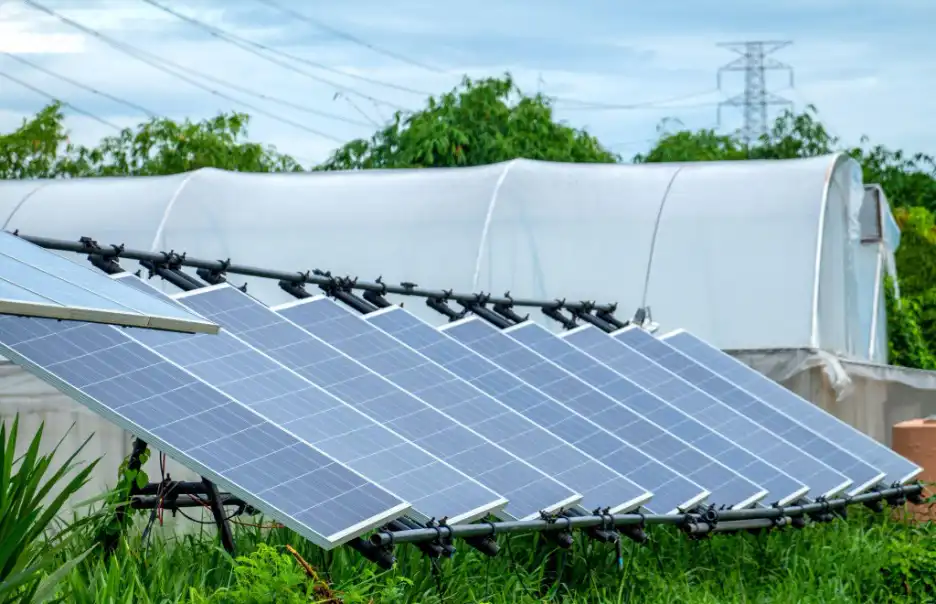
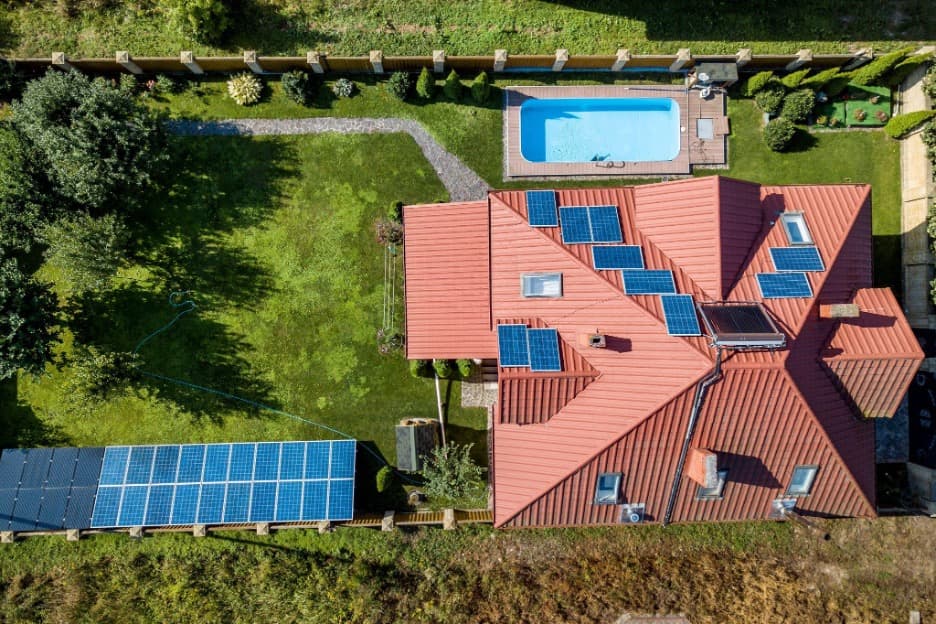
Solar collectors (thermal devices that use solar energy to heat a liquid, most often flat-plate or evacuated tube) are installed on the building's roof or another suitable surface, where they absorb the sun's heat and transfer it to the liquid.
2. Transferring heat to the water
The heated liquid from the collectors circulates through a heat exchanger located in the tank (boiler) and transfers heat to the water. After that, the liquid returns to the collector to collect energy again.
3. The tank stores the hot water
The hot water is stored in a thermally insulated tank and used as needed. The tank size depends on the size of the system and the needs of the household or building.
4. Auxiliary source (if required)
On cloudy days or in winter, an auxiliary heater (electric or gas) can be used, which automatically switches on only if the water temperature drops below the set point. However, the solar system can be further upgraded by installing batteries to store surplus solar energy. This way, during sunny days, energy is accumulated and stored for later use in cooler days, which significantly reduces or completely eliminates the need to use electricity or gas in winter months. Batteries can be integrated into the system with solar collectors and automatically switch on when there is insufficient solar energy.
What types of solar water heating systems exist?
Solar water heating systems are divided into two basic categories: active and passive. The difference between them lies in the way the fluid circulates through the system, active systems use pumps and electronic controls, while passive systems work based on the natural flow of fluid, with no mechanical parts.
Active solar systems
Active systems are more efficient because they allow greater control and better heat flow, but they are also more complex, require power, and need regular maintenance. There are two types:
- Direct Circulation Systems
In these systems, water from the tank flows directly through the solar collectors. Since there is no protection against freezing, they are recommended exclusively in areas with mild winters and moderate climatic conditions.
- Indirect Circulation Systems
Instead of water, a liquid resistant to low temperatures circulates through the collectors. Heat from that liquid is transferred to the water through a heat exchanger. These systems are reliable and suitable for regions with harsh winters, because they prevent pipe freezing.
Passive solar systems
Passive systems have no moving parts, which makes them a simpler and longer-lasting solution, but they generally have a lower degree of efficiency. They are ideal for households that want minimal maintenance and stable operation throughout the year. There are:
- Integral Collector Storage (ICS) systems
In these systems, the collector and the water tank are integrated into a single unit. The water is heated directly in the tank, which is exposed to sunlight. This kind of system works best in warm regions and in households with greater daily hot-water needs.
- Thermosiphon systems
Based on the natural movement of water, as the water heats up, it naturally rises toward the tank, while colder water from it goes to the bottom of the collector. Due to their simple construction and reliability, this is a very widespread system, but the roof structure needs to be planned in advance because of the additional weight.
How much can you save with solar water heating?
In an average household, a solar system can cover:
-
70 to 90% of annual hot water needs
-
Savings of up to €300 to 500 per year, depending on the number of household members and habits
The return on investment is usually achieved within 4 to 7 years, while the lifespan of a quality system is 20 to 25 years. Monthly savings are significant, but the best insight is gained after several years of using solar sanitary water heating, and that's when it becomes evident that this form of water heating pays off the most.
Does solar water heating work in winter?
Yes, solar water heating is fully efficient in winter too, even though sun exposure is reduced. With the right collector dimensions, solar heating works at low temperatures as well. In winter, it's useful to have an auxiliary heater (electric or gas) for days with weak sun, or additional batteries that will collect extra energy on sunny days for days when the sun is weaker.
What are the biggest advantages of solar water heating?
-
Reduced electricity or gas bills
-
Long-term savings and energy independence
-
An environmentally clean solution for heating large volumes of sanitary water
-
The possibility of subsidies and concessions
-
Higher property value
-
Functionality even in remote, off-grid locations
Bear in mind that solar water heating is no longer a matter of the future, it's today's reality for everyone who wants to reduce costs, become energy independent, and contribute to protecting nature. It is the world's most common choice when it comes to heating sanitary water. A solar hot-water system is a smart investment with multiple benefits.
If you'd like to know how solar energy could solve your needs for water heating or electricity supply, check out our solar panel offer and solutions tailored to your property.