Cold weather and low temperatures can seriously ruin all the effort we put into growing plants in a greenhouse. Early spring and late autumn bring icy nights that slow plant growth, which is why heating a greenhouse is a good solution, both for serious growers and for those who produce food only for their own family's needs.
How do you heat a greenhouse and achieve a stable yet economical temperature, with minimal cost?
Stick with us to find out about every greenhouse heating method available, and why solar panels and solar-based greenhouse heating systems are being used more and more.
Why is greenhouse heating important?
If you have ever grown seedlings or plants in a greenhouse, you know how much temperature can affect their growth. Plants are especially sensitive during germination and early development. Even when the day is warm and mostly sunny, the nights can be quite cold. This is especially common in early spring or in autumn, and it slows growth and reduces yields.
If you don't grow them properly, young plants experience thermal shock. That means they either won't survive or will lag in growth. In commercial production, this automatically means lower profit and much higher risk.
That is why, during the colder days, it is important to provide a stable temperature in the greenhouse that resembles the natural conditions of warmer months. A good temperature means healthy seedlings and faster growth. That way you have more reliable production, regardless of the weather outside.
The most common ways to heat a greenhouse
You can opt for classic electric or wood heating, or the increasingly popular use of solar energy. If you're wondering how to heat a greenhouse efficiently and in the long term, solar systems are becoming one of the best solutions. This is especially rewarding for those who have larger surface areas and want to save on monthly costs.
Farmers choose different ways to heat greenhouses. Each system has its advantages and drawbacks. The choice of heating depends on the size of the greenhouse, the local climate, and the budget.
Here are the ways greenhouses can be heated:
-
Electric heating: One of the most common solutions. Easy to set up, but can be expensive, especially if the greenhouse is poorly insulated. Electric heaters raise the temperature quickly, but they burn through kilowatts just as fast.
-
Wood or coal heating: Cost-effective for those with access to cheap fuel. A stove and chimney are required, but constant supervision is needed. The temperature is not uniform, so it's harder to control.
-
Gas heating: Efficient, but requires a bottle or a gas-grid connection. It can also be expensive if used for longer periods.
-
Hot-water heating (boilers and pipe systems), Often used in larger greenhouses. Water is heated and runs through pipes beneath the plants. Heats evenly, but the system can be expensive to install.
-
Solar heating: An increasingly popular option. Once installed, it uses the free energy of the sun. It can heat the greenhouse directly or power other devices: heaters, ventilation, even lighting. It can work in two ways: either you produce electricity with solar panels and use it to heat the greenhouse, or you use solar collectors and heat with warm water. This is one of the most economical solutions today, and that's why it's an increasingly common choice among larger producers.
Solar systems, a modern and cost-effective solution for greenhouses
Serious growers who invest wisely choose solar systems for heating greenhouses. The reason is simple and rational. The sun doesn't cost a penny, and the energy it provides can heat seedlings, power ventilation, and light the space, all without monthly bills for gas or electricity.
Beyond this immeasurable benefit, farmers point out the advantages of using and installing solar systems in rural areas where the electricity distribution network is hard to access. In addition, larger plots of land leave farmers room to build serious solar systems that most often serve both their household and their agricultural production.
How does a solar system for a greenhouse work?
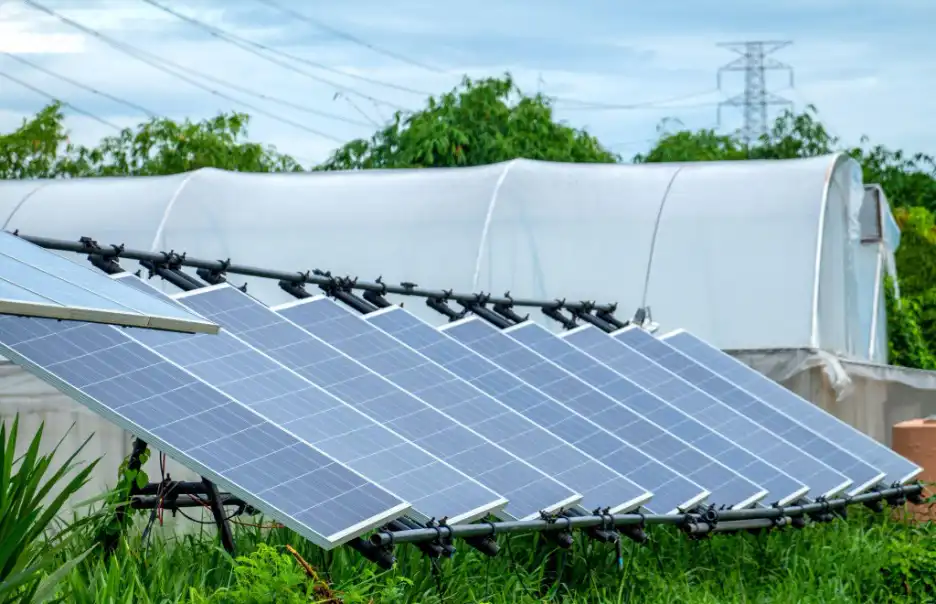
Solar panels are placed on the roof of the greenhouse or nearby on the ground, where they collect solar energy and convert it into electricity or heat. This energy is then used for:
- powering electric heaters or fans
- heating water that is run through a pipe system beneath the plants
- lighting the greenhouse during cloudy days
The system can operate on its own (off-grid) or be connected to the grid, depending on the size of the greenhouse and the requirements.
What are the advantages of solar greenhouse heating?
- Big savings, no costs for electricity, gas, or fuel.
- Ecologically clean, does not pollute plants or air, and produces no smoke.
- Subsidy potential, the state provides subsidies and support for everyone who chooses ecological solutions.
- Even heating, controlled temperature without swings.
- Safe and quiet, no open flame or risk of fire.
- A long-term solution, panels last up to 25 years.
When does a solar system for a greenhouse pay off?
The biggest benefits go to owners of larger greenhouses and nurseries where heating costs are high. It's an excellent choice for everyone who grows plants in winter, or in hilly areas where cold spells are common, morning frosts last almost until summer, and there are large temperature swings between day and night.
How do you install a solar system for greenhouse heating?
Setting up a solar system for a greenhouse only sounds complicated. In practice, it is much simpler than we think, especially if you work with an expert installation team.
The most important thing is that the system is tailored to your needs, the size of the greenhouse, and your budget.
Installation includes:
-
Installing the solar panels: The panels are mounted on the roof of the greenhouse or on the ground, at the angle that captures the most sunlight during the day. They are chosen based on the power required for heating.
-
Installing the control unit and regulator: These devices manage the flow of energy and protect the system from overload. They maintain a stable temperature in the greenhouse automatically.
-
Connecting to heaters, pumps or lighting: The solar system can directly power electric heaters, water pumps, or LED lights. In some cases it is used to heat water that in turn heats the greenhouse.
-
Installing batteries (if it is an off-grid system): Batteries store surplus energy for night-time or cloudy days. This is useful if the greenhouse is not connected to the electricity grid.
-
Testing and configuration: Once everything is connected, the system is tested, operation is checked, and the temperature is set according to plant needs.
To install this system, you don't need to know the technology or be an expert. What matters is that you have a reliable partner who can perform the complete installation. That is exactly what the MySolar team offers, analysing your needs and delivering a complete solar solution for greenhouses, with installation, training, and support.
Heating a greenhouse doesn't have to be expensive or complicated. By installing a solar system, you get a stable temperature, healthy seedlings, and lower costs years into the future.
If you are considering an efficient, long-term solution, MySolar can help you save energy and increase your yield.