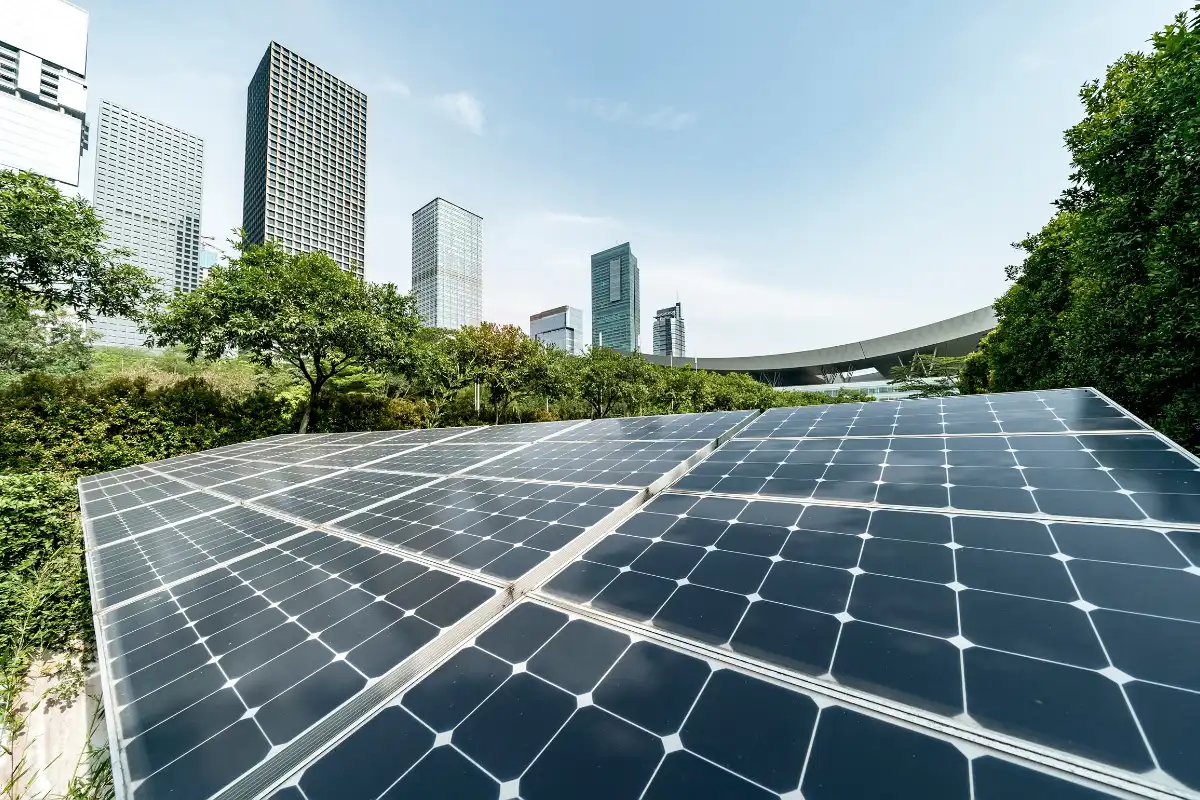
When renewable energy comes up in conversation, most people think of solar panels installed on the roofs of houses and buildings.
In recent years, however, solar carports have been drawing more and more attention. They are excellent, elegant and functional solutions that simultaneously provide shade and generate electricity.
Solar carports combine practicality and sustainability, ideal for households, businesses, and parking areas that want to make the most of solar energy. Read on to learn everything about them, their installation, and the enormous potential they offer.
What are solar carports and how do they work?
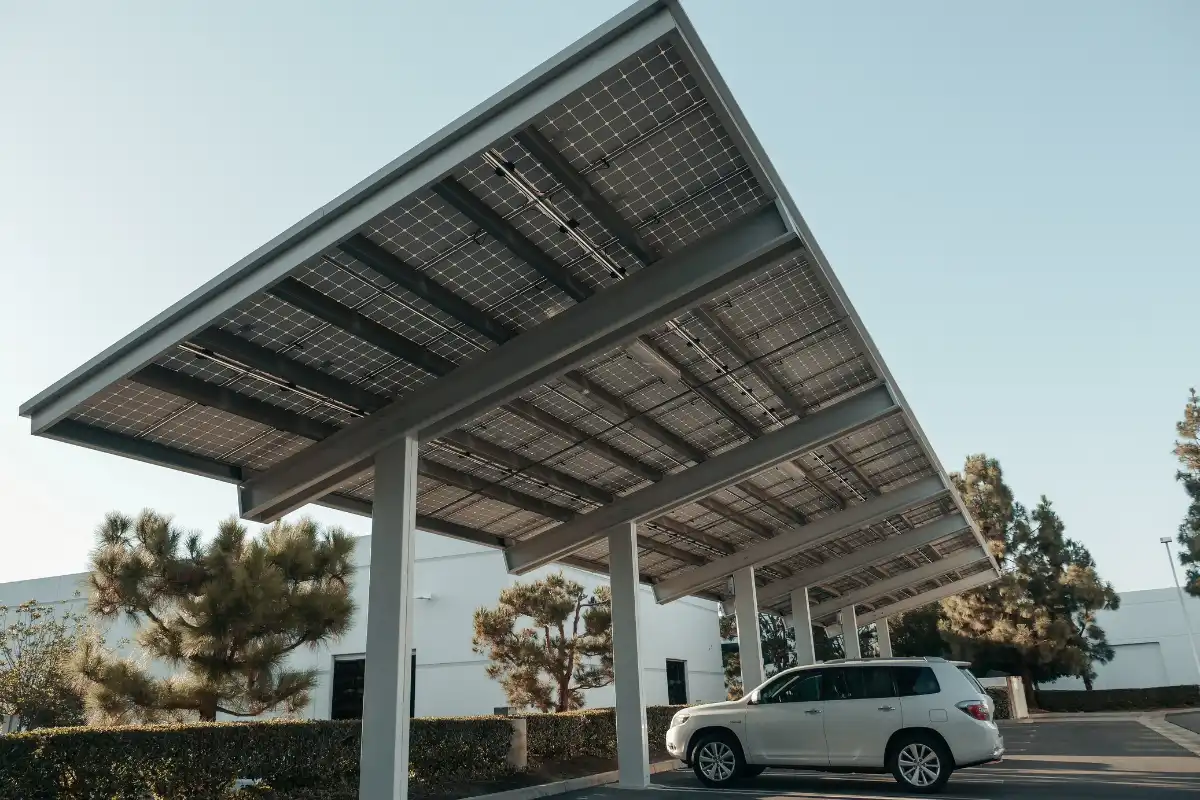
A solar carport is a structure (most often made of steel or aluminium) whose roof surface is covered with solar panels.
Unlike rooftop solar panels, a carport can serve as shelter for cars, terraces, building entrances, or outdoor workspaces, while at the same time generating electricity through its photovoltaic cells.
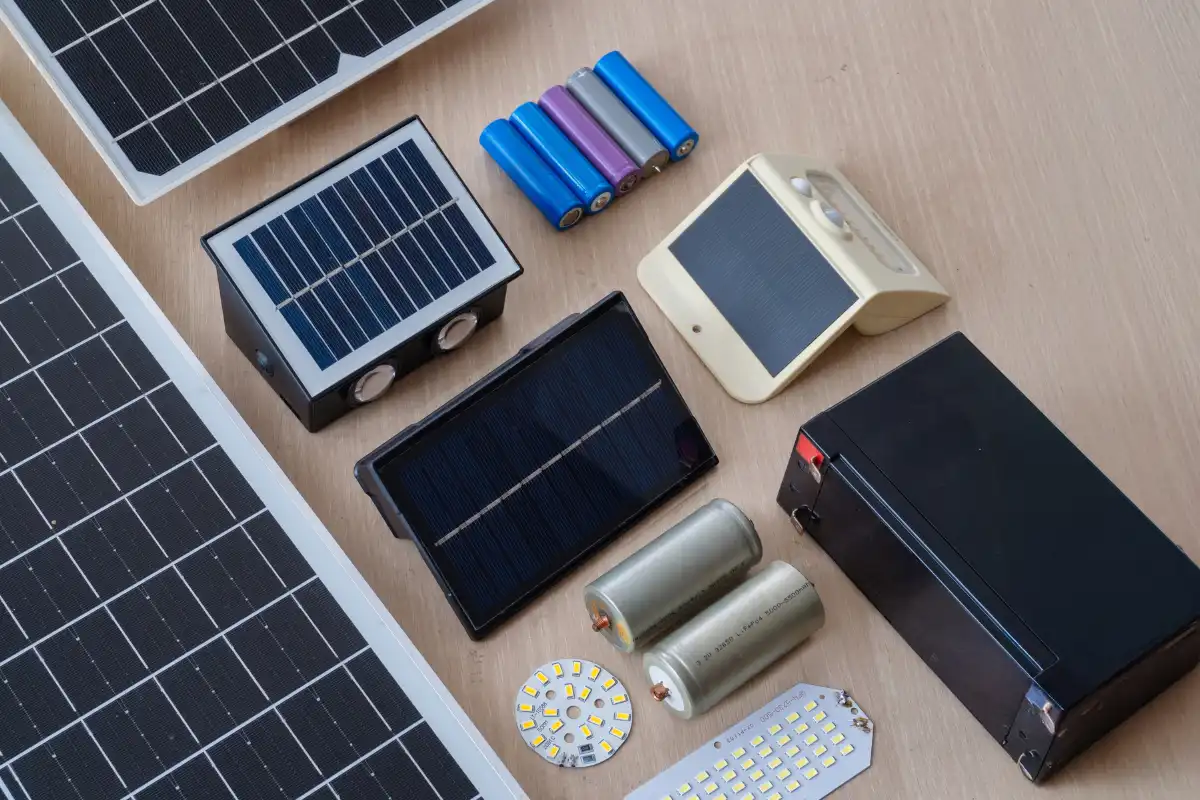
When sunlight hits the panels, the energy is converted into electricity and channelled to the inverter, which then sends that energy into the grid or into a battery system that stores any surplus.
This way you get a true mini solar system, because that is exactly what a solar carport is: practical, aesthetically appealing, and fully sustainable.
Advantages of solar carports
The biggest advantage of solar carports is that you get a 2-in-1 structure. A solar carport provides protection from sun, rain and snow, while at the same time generating electricity that can cover part of a household's or business's consumption.
Unlike traditional rooftop panels, solar carports do not require an existing building. They can be installed almost anywhere outdoors, which makes them an ideal solution when the roof is not suitable for installation (e.g. due to orientation, tilt, or the age of the building).
Other advantages include:
- energy independence: part of your energy comes directly from your carport, and electricity bills drop accordingly
- a long service life and minimal maintenance: the panels are weather-resistant and only require occasional cleaning
- aesthetic appeal: a modern design that fits both residential and commercial properties
- ecological value: every kilowatt-hour produced from sunlight means less carbon dioxide emissions and a cleaner environment.
Where can solar carports be installed?
When it comes to installation, you really can let your imagination run wild. Solar carports are exceptionally adaptable and can be installed in a variety of locations, in courtyards, parking lots, in front of office buildings, warehouses, or production halls.
In households they are often used as covers for cars or as canopies for terraces and entrances, naturally cooling the space below while at the same time producing energy for the household.
In many companies, solar carports are most often installed over employee or customer car parks. This turns large, previously unused open spaces into mini power plants that now reduce operating costs.
Combined with an EV charging system, carports become a symbol of a modern, environmentally conscious business.
Solar carports for cars
One of the most popular variants is definitely the solar garage or parking-lot carport. Besides protecting vehicles from UV radiation, rain and snow, these structures produce energy that can be used to charge electric vehicles or power the home.
An average solar carport for two cars can have an installed capacity of 3 to 6 kW, which is enough for the average daily needs of a single household.
If it is connected to a hybrid or off-grid system with batteries, the surplus energy can be stored and used in the evening.
Solar carports are especially useful for households planning to switch to electric vehicles, because they allow EV charging from your own production, with no additional grid costs.
How much energy can a solar carport produce?
This is undoubtedly one of the first questions people ask when considering a solar carport.
However, there is no single answer. The amount of energy depends on multiple factors: the surface of the carport, the number and capacity of panels, orientation to the sun, tilt, and geographic location.
On average, one square metre of solar panels can produce 120 to 160 kWh per year, which means a standard 20 m² carport can produce up to 3,000 kWh of energy annually.
For companies and corporations with larger parking lots, production can be many times greater. And this is exactly where another impact of installing a solar carport shows up, it becomes an important part of the company's energy strategy by lowering costs and at the same time contributing to a green image.
Solar carports are far more than a modern architectural addition. They are a smart solution that combines aesthetics, protection, and energy generation.
Whether you want to protect your car, cut your electricity consumption, or add a modern feature to your property, a solar carport is the right choice.
With it, you gain extra functionality, save money, and show real care for the planet at the same time.
Frequently asked questions
Which panel types are most often used for carports, and why?
For solar carports, bifacial panels (which are active on both sides) are most often used:
- They are ideal for carports because they capture light from below as well
- Additional production is 5 to 15% in practice
- They offer the best power-to-area ratio
- They are resistant to outdoor conditions (hail, UV radiation, rain)
- They have a long service life and the highest yield per square metre
- They are recommended if the surface beneath the carport is light-coloured (concrete, paving stones)
Is there a minimum carport area below which installation is not recommended?
Yes. Practice shows that there is a minimum threshold of economic viability. The ideal carport for a more serious system is 25 to 30 m² (10 to 12 panels).
How much does shade affect profitability (tree, building, pillar)?
Shade is the biggest enemy of solar panels. In practice: 10% shade = 10 to 30% energy loss (depending on orientation). Short-term shade (a pillar, a utility pole) causes minimal losses, but a large shadow (a tree, a house) can reduce profitability by up to 40%.
That is why we always recommend a software simulation (we use a licensed program for the calculation) and optimisers if the shade is intermittent and unavoidable.
What is the average annual production our clients achieve?
Our clients usually achieve roughly 1 kW of solar capacity ≈ 1,200 to 1,400 kWh per year:
6 kW = 7,200 to 8,400 kWh
8 kW = 9,600 to 11,200 kWh
10 kW = 12,000 to 14,000 kWh
For example, from real-world practice:
A 10 kW carport in Pančevo (south orientation, 17° tilt) produced:
→ 13,680 kWh in its first year
What are the most complex projects you've worked on?
The most common complications we encounter on site are:
- installation on uneven terrain
- combination of parking + carport
- windy regions (Banat), additional reinforcement required
- large surfaces (over 100 m²)
- installations in buildings where the client expects a premium look
For example:
A 13.8 m × 6.9 m carport in a windy zone, triple-reinforced columns, anchors up to 120 cm deep, special mounts to handle snow load.
Do carport panels get dirty more easily than rooftop panels?
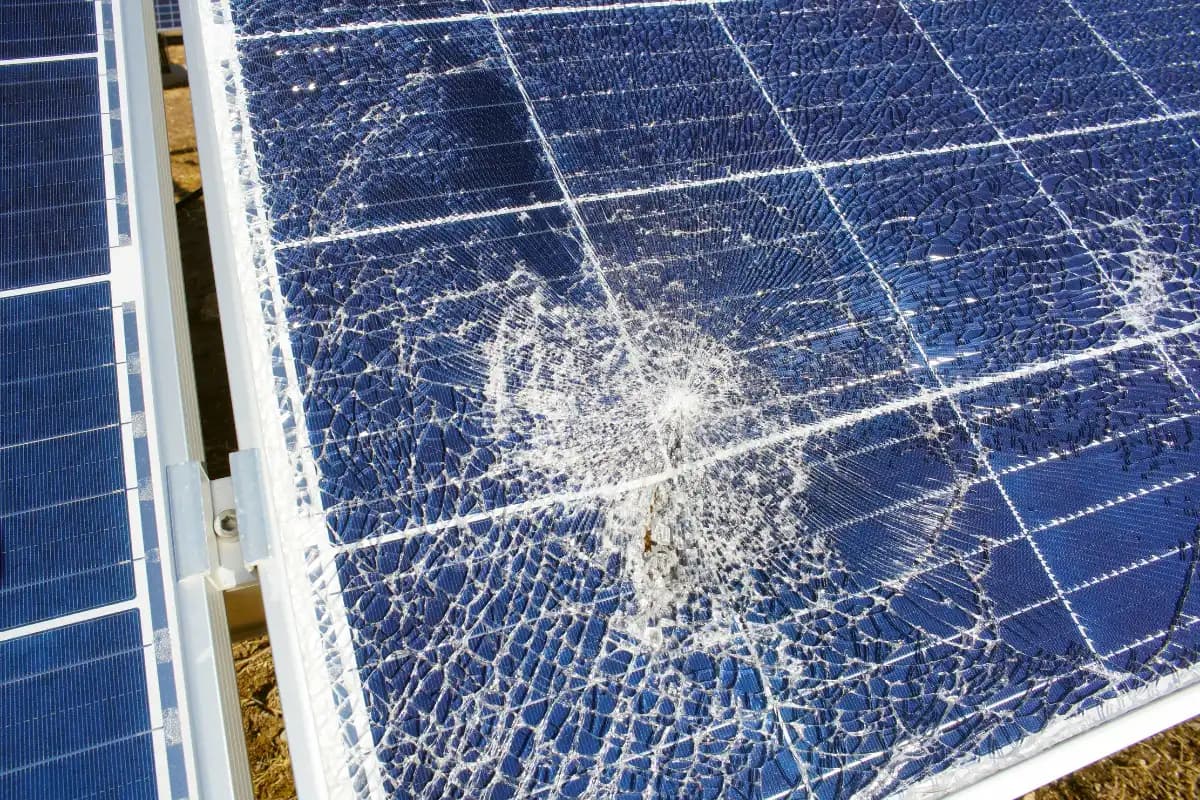
Yes, slightly. The reasons are a shallower tilt, more dust and dirt from the parking area, and rainfall that doesn't wash dirt away as well.
Solutions to prevent dirt buildup on solar carport panels:
- a minimum tilt of 12 to 15°
- washing 1 to 2 times per year
- bifacial panels are somewhat more tolerant because they keep producing even when the top surface is dirty
Who is the most common customer of solar carports?
Based on our experience so far:
1) Households
The most ordered models are garage and yard carports with 12 to 18 panels.
2) Companies
Parking carports with 20 to 200 panels. They often go together with EV chargers.
3) Investors
They construct commercial buildings and install carports immediately because of:
- the increase in property value
- the reduction in electricity costs
- green certifications
What documentation is required for installation?
For standard household carports, usually:
- invoice + warranties
- design documentation
- EPS approval if connecting to an existing power system
For companies:
- structural calculations
- electrical installation documentation
- structure and panel certifications
Is a building permit required to install solar panels on carports?
In 90% of cases, no.
A building permit is not required for:
- a yard carport
- a parking carport
- a structure without foundations in the legal sense of construction
- a prefabricated structure considered an "auxiliary object"
However, a building permit may be required when:
- the carport exceeds 50 m²
- it has massive foundations
- part of the structure becomes an integral part of the main building
- it is installed for a company where the inspector requires structural calculations.