When the electricity connection arrives at your new home or business space, you probably think the biggest costs are behind you. The reality is different: the real bills are yet to come, and they keep repeating month after month. The grid connection is still not the end of the costs.
If you want to avoid the discomfort of high electricity bills, consider a long-term investment in a solar system. Savings on electricity bills can be enormous. The smartest move is to plan a sustainable energy strategy while you're still in the move-in and fit-out phase.
In this article, read on for how much it costs to bring electricity in, and how a solar system saves you money.
How much does an electricity connection cost?
A connection with a capacity of 11 to 17 kW for a household costs on average from 30,000 to 120,000 RSD. For business properties, the price is often higher, from 120,000 to over 200,000 RSD. Connections for multi-residential buildings of up to four flats run up to 60,000 RSD.
The price of a household electricity connection depends on the connection capacity, the type of building, and the distance from the existing grid.
Additional costs can arise if a new substation or a longer service cable needs to be built.
Many investors and owners of new buildings forget that this cost is just the beginning. The real hit on the budget comes later, through monthly electricity bills.
That's why more and more people are deciding, already at this stage, to consider installing a solar system that ensures, over the long term:
-
lower monthly bills
-
energy independence
-
faster return on investment
If you're already investing in infrastructure, why not at the same time plan how to profit from it for years to come.
How long do you wait for an electricity connection?
When you submit an application for a connection, you have to be patient while the administrative procedure runs its course. The procedure sometimes takes only around 15 days, but it can stretch to 2 or 3 months. How long you'll wait for the connection depends on the property's location, the administrative steps, and any additional work the electricity distribution company has to do.
For buildings in urban areas, the process usually goes faster, while in rural and less infrastructure-developed areas, the wait is longer.
Many people don't realise that the waiting time is the ideal period for planning long-term savings. That is precisely when you can take the opportunity to consider installing solar panels.
Think about it while the building is not yet fully in use, because once everything is finished, hardly anyone goes back a step to consider new installations.
How much more expensive is industrial electricity?
Legal entities, unlike households, pay for industrial electricity. This electricity is significantly more expensive. If we look at monthly costs, the price of electricity for a business space can be up to 50% higher compared to households with the same level of consumption.
The price of industrial electricity depends on:
-
contracted capacity
-
consumption in the higher and lower tariff
-
the voltage level
That is why entrepreneurs and business owners are increasingly looking for ways to optimise their costs.
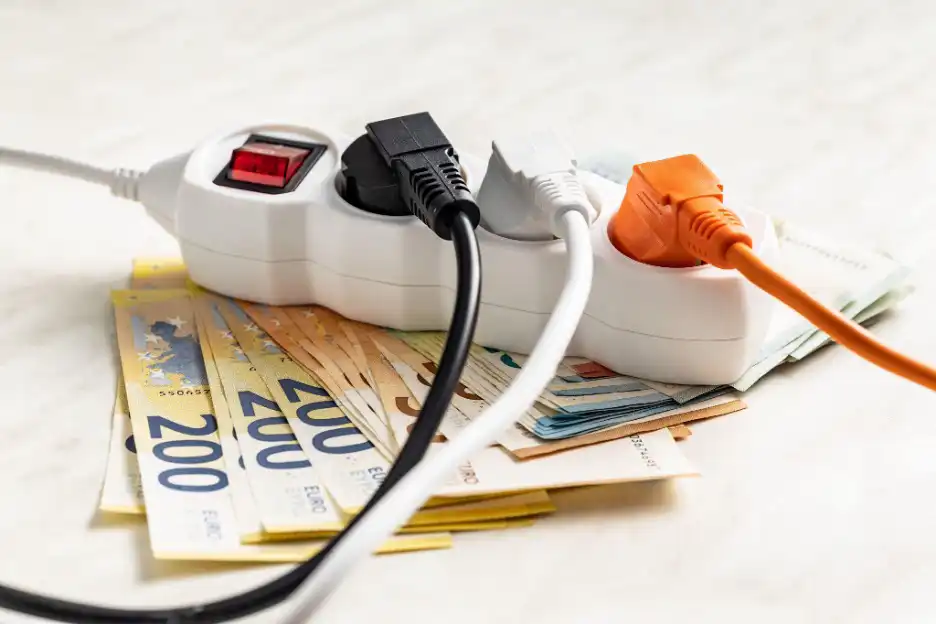
When does cheap electricity start?
The two-tariff meter system in Serbia provides users with cheaper electricity. The night-time tariff differs by region and is valid all seven days of the week at the following times:
-
Central Serbia: from 22:00 to 06:00
-
Vojvodina: from 23:00 to 07:00
-
Belgrade: from 00:00 to 08:00
This way of billing electricity gives users the opportunity to plan consumption according to the lower and higher tariff. The catch is that the cheap tariff only applies at night, in the windows prescribed for each part of the country.
In practice, we use the most electricity during the day, so even with the two-tariff system, our bills remain high.
Solar panels produce energy during the periods when electricity is the most expensive and when consumption is highest, and then there is no need to wait for midnight to turn on electrical appliances. That way you become more energy-efficient and save in the long run without giving anything up.
How much does a kilowatt of electricity cost?
The price of a kilowatt-hour of electricity depends on the consumption zone. In Serbia there are three zones, green, blue, red, and two tariffs, higher and lower.
For households with a two-tariff meter, the approximate prices are:
-
Higher tariff (daytime electricity): around 13.31 RSD/kWh in the green zone,
-
Lower tariff (night-time electricity): around 3.33 RSD/kWh in the green zone.
If monthly consumption exceeds the green zone limit of 350 kWh, it moves into the blue, and then the red zone, where prices are significantly higher. In the most expensive red zone, the price goes up to 26.62 RSD/kWh.
For commercial properties, the prices of industrial electricity are incomparably higher. They depend on the agreed terms with EPS and total consumption.
Installing a solar system in a business property is an excellent investment, because it not only reduces dependence on expensive tariffs but also brings a return on investment within a few years. This way you get the opportunity for additional concessions and subsidies.
As soon as you secure an electricity connection, also consider installing solar panels. The real savings begin when you take control of your own energy.