
Most households in Serbia never actively chose the type of meter installed at their home, they simply received whichever one was available at the time of connection. Yet the difference between a two-tariff and a single-tariff meter directly shapes how much you pay for electricity every month. With the latest price hikes and the lowered threshold for the red zone (down from 1,600 to 1,200 kWh), this question has never been more relevant.
In this guide, we break down how each meter works, what the real cost difference looks like, who benefits from which option, and what to do if you want to switch.
What is a single-tariff meter?
A single-tariff meter measures total electricity consumption without distinguishing between times of day. Every kilowatt-hour you use, whether at 3 p.m. or 3 a.m., is billed at the same price.
That price depends entirely on the consumption zone you fall into:
- Green zone (up to 350 kWh per month): lowest price
- Blue zone (351 to 1,200 kWh): higher price
- Red zone (over 1,200 kWh): the most expensive, almost double the blue zone rate
For a household consuming 500 kWh per month, a single-tariff meter bills all 500 kWh at the unified zone rate, regardless of when the electricity was actually used.
What is a two-tariff meter?
A two-tariff meter splits consumption into two periods: the higher tariff (more expensive, daytime) and the lower tariff (cheaper, nighttime). The meter records how much you consumed in each period separately, and each is billed at a different rate.
Lower-tariff periods vary by region:
- Belgrade: from 00:00 to 08:00
- Vojvodina: from 23:00 to 07:00
- Central Serbia: from 22:00 to 06:00
On weekends and holidays, most distributors extend the lower tariff window, but this varies. The key point: the lower tariff is roughly four times cheaper than the higher tariff in the same zone. That is a massive difference, if you can shift a meaningful share of your consumption to the night.
Current electricity prices by tariff and zone (2026)
Here are the actual rates that have applied since October 2025 (excluding VAT):
Single-tariff meter:
- Green zone: 4.81 RSD/kWh
- Blue zone: 7.21 RSD/kWh
- Red zone: 14.42 RSD/kWh
Two-tariff meter: higher tariff (daytime)
- Green zone: 9.61 RSD/kWh
- Blue zone: 14.42 RSD/kWh
- Red zone: 28.84 RSD/kWh
Two-tariff meter: lower tariff (nighttime)
- Green zone: 2.40 RSD/kWh
- Blue zone: 3.61 RSD/kWh
- Red zone: 7.21 RSD/kWh
Add 20% VAT to all prices to get the final amount on your bill.
What jumps out immediately: the daytime tariff on a two-tariff meter is more expensive than the single-tariff rate in the same zone. That means a two-tariff meter is not automatically cheaper, it depends on how much of your consumption you actually move to the night.
How much do you really save with a two-tariff meter?
Let's compare two scenarios for a household consuming 600 kWh per month (blue zone).
Scenario 1: Single-tariff meter
All 600 kWh at the single-tariff blue-zone rate (7.21 RSD/kWh) = 4,326 RSD + VAT ≈ 5,191 RSD
Scenario 2: Two-tariff meter, realistic split (70% day / 30% night)
420 kWh at the higher tariff (14.42 RSD) = 6,056 RSD 180 kWh at the lower tariff (3.61 RSD) = 650 RSD Total: 6,706 RSD + VAT ≈ 8,047 RSD
In this scenario, the two-tariff meter is actually MORE EXPENSIVE because the daytime tariff is double the single-tariff rate, and only 30% of consumption happens at night.
Scenario 3: Two-tariff meter, optimised split (40% day / 60% night)
240 kWh at the higher tariff = 3,461 RSD 360 kWh at the lower tariff = 1,300 RSD Total: 4,761 RSD + VAT ≈ 5,713 RSD
Only when you shift 60% or more of your consumption to the night does a two-tariff meter start to pay off meaningfully. In practice, that means your biggest appliances, water heater, washing machine, dishwasher, storage heater, must run almost exclusively at night, consistently.
Who benefits from a two-tariff meter, and who is better off with single-tariff?
A two-tariff meter pays off if you:
- Use a storage heater for heating that charges only at night
- Have a water heater you can programme to heat at night
- Own an electric car you charge at night
- Have total consumption above 600 kWh per month and can organise your washing machine, dishwasher and similar appliances to run after midnight
- Have the discipline to consistently shift consumption to night hours
A single-tariff meter is sufficient (or even better) if you:
- Do not use electricity for heating
- Consume less than 400 to 500 kWh per month
- Cannot or do not want to change appliance usage habits
- Live in an apartment where running a washing machine at night would disturb neighbours
- Your consumption is mostly during the day (working from home, cooking, air conditioning)
How do you switch from a single-tariff to a two-tariff meter?
The procedure varies by region, but it generally looks like this:
You submit a request for technical conditions at your local EPS Distribucija branch (Serbia's electricity distribution operator). Once approved, you hire a licensed electrician for any required adjustments. After the inspection, you pay the replacement costs, a new meter runs roughly 8,000 to 12,000 RSD, plus an MTK (ripple-control) receiver at around 1,000 to 4,000 RSD. The whole process takes anywhere from a few weeks to a few months, depending on location.
Make sure to verify that your bill correctly reflects both tariffs after the swap, there are cases where a two-tariff meter is mistakenly billed as a single-tariff one.
What is changing in 2026, and why does it matter right now?
Two key developments have significantly shifted the calculation:
First, the threshold for the red zone has been lowered from 1,600 to 1,200 kWh. That means households heating with electricity hit the most expensive bracket much faster, where the kilowatt-hour is double the price. For these households, a two-tariff meter becomes even more important, but still only if they can shift enough consumption to the night.
Second, another electricity price hike is planned no later than October 2026, no less than inflation plus one percentage point. That means the gap between the daytime and nighttime tariffs will keep widening in absolute terms, making a two-tariff meter potentially more attractive for those who can adapt their usage.
Is there a better solution than choosing between tariffs?
Both single- and two-tariff meters address the same problem, they partially reduce the bill, but they do not eliminate your dependence on rising electricity prices. Even with a two-tariff meter and perfect optimisation, you still pay for every kilowatt-hour you consume, and prices keep climbing.
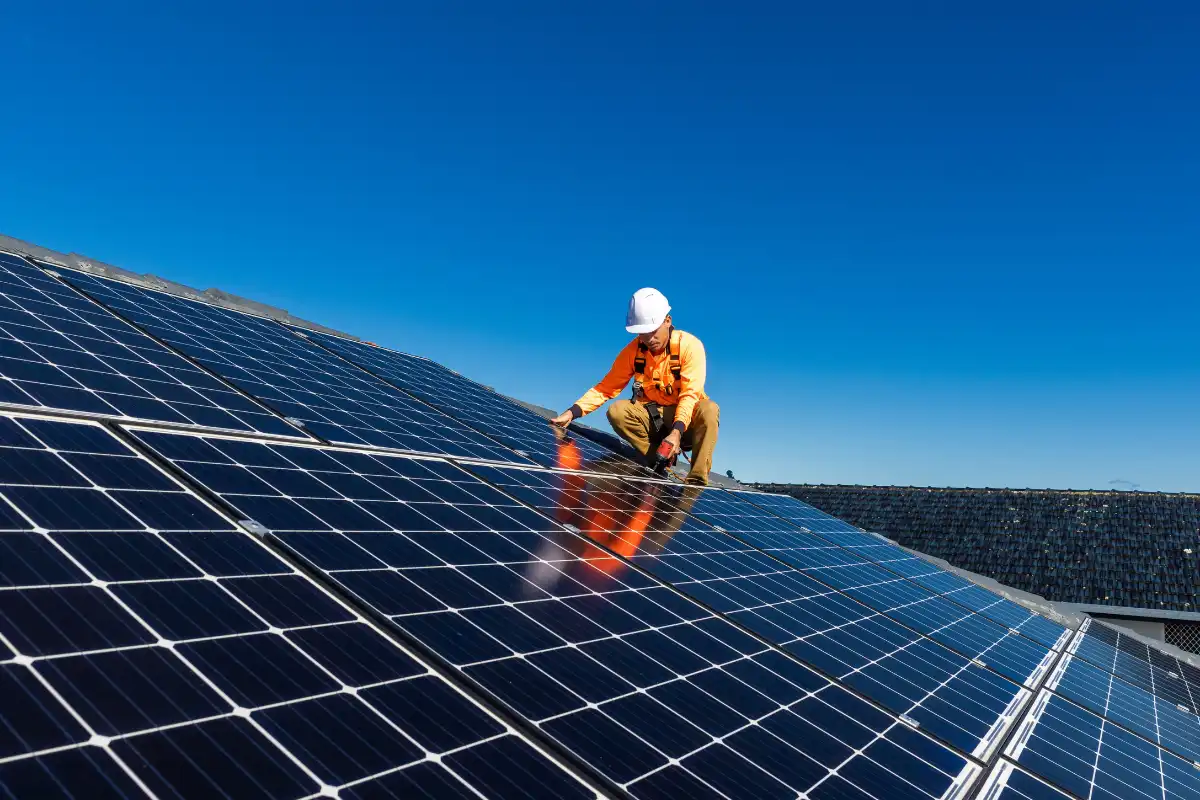
Solar panels work on a fundamentally different principle: you produce your own electricity during the day, and the surplus you do not use is stored in the grid through the prosumer model, which you can then draw on at night or in winter. You are not choosing between a more expensive and a cheaper tariff because you are not buying your electricity from EPS in the first place.
Concretely: a household consuming 600 kWh per month that installs a 6 kW solar system can cut its bill by 70 to 80%. That is a saving of 4,000 to 5,000 RSD per month, regardless of whether you have a single- or two-tariff meter. And with constant electricity price hikes, that saving grows every year.
A 6 kW system from MySolar starts at €4,990 including VAT, on a turnkey basis, design, panels, inverter, mounting structure, installation, commissioning, and the full paperwork for prosumer status are all included. The investment pays for itself in 5 to 7 years, after which you have effectively free electricity for the next 25+ years.
In conclusion, two-tariff or single-tariff?
If you cannot shift at least 50 to 60% of your consumption to the night, a single-tariff meter is just as good, or even better. A two-tariff meter only pays off with disciplined night-time consumption, especially for households with storage heaters or high consumption.
But for long-term protection against price hikes, both single- and two-tariff meters are only partial solutions. Solar panels are the only way to fully shield yourself from rising electricity prices and take control of your own energy.
Want to find out how much you would really save with solar panels? Call us for a free on-site visit and assessment, we will calculate the exact savings based on your electricity bill.