How many times has voltage drop caused problems in your home? From appliances misbehaving, think the fridge, to lower energy efficiency, and on top of that, higher electricity bills.
Unfortunately, voltage drop is a very common occurrence that happens everywhere, but especially in settlements with older infrastructure and rural areas. New buildings without proper wiring are not exempt either.
Read on to learn how to recognise voltage drop, what it means for household appliances, how it is calculated, and, most importantly, how to prevent it, including the long-term solution using solar panels with batteries and inverters.
Voltage drop at home
The nominal voltage in households in Serbia is 230 volts, with a tolerance of ±10%. That means appliances should operate safely in the range between 207 V and 253 V.
If the voltage drops below that minimum, voltage drop occurs, which manifests in various disturbances in appliance operation.
A voltage drop can happen for several reasons, the most common being:
- poor and outdated electrical wiring in the house
- a large number of appliances being used simultaneously
- the house being far from the substation or the end of the low-voltage network
- using cables with too small a cross-section for the load
In some households, voltage drop is an occasional event, while in others it is a chronic problem that requires a systemic, long-term solution.
What happens to appliances when voltage drops?
Voltage drop can lead to serious faults and damage, especially in sensitive appliances.
Here are the most common consequences:
- Electric motors overheat and run inefficiently. Appliances such as fridges, air conditioners, washing machines and pumps draw more current at lower voltage to achieve the same output. That can lead to overheating and damage.
- Electronic devices are prone to faults. Computers, televisions, routers and other sensitive devices suffer from improper voltage, which can lead to data loss or permanent damage.
- Lighting flickers or cuts out: LED and energy-saving bulbs are particularly sensitive to voltage variations.
- Appliances restart on their own or fail to complete operating cycles, which extends their usage and indirectly increases energy consumption.
For all these reasons, voltage drop is not a problem to be ignored, it is a clear sign that you should check, and potentially modernise, the electrical network in the house. It is more than necessary.
Calculating voltage drop, how to compute it?
To calculate exactly how much voltage drop is "costing" you, there is a formula. Although it may look a little complicated at first glance, we'll try to simplify it as much as possible.
For a single-phase network:
ΔV = (2 × L × I × ρ) / A
Where:
- ΔV, voltage drop in volts
- L, conductor length (in metres)
- I, current (in amperes)
- ρ, specific resistivity of the conductor (e.g. copper: 0.0175 Ω·mm²/m)
- A, conductor cross-section (in mm²)
In practical terms, if you use a 30 m cable with 16 A of current and a 2.5 mm² cross-section, the voltage drop can be as much as 9 V, a significant loss, especially for sensitive appliances.
In three-phase networks a different coefficient is used (√3 instead of 2), but the basic principles remain the same.
Devices like digital multimeters and advanced smart meters can also help determine the actual voltage drop in different parts of the network.
Does voltage drop affect consumption?
At first glance, no. Strictly and superficially, we can say that the meter measures total energy expressed in kilowatt-hours (kWh), not voltage directly.
However, in real conditions, voltage drop can lead to higher consumption because:
- Appliances run longer to achieve the same output. Water heaters and washing machines, for example, take more time to heat water.
- Electric motors draw more current at lower voltage, which increases losses in the network.
- Appliance efficiency drops, extending their operation and leading to additional energy losses.
So we can see that voltage drop itself doesn't directly affect the meter, but it indirectly affects monthly bills and the performance of every appliance in the house.
How to prevent voltage drop?
The solutions depend on whether the problem lies inside the house or in the external network. Some of the basic solutions are:
- Replacing cables with larger cross-sections, especially for distant loads (e.g. the garage, outbuildings).
- Optimising the load, so that heavy loads are not switched on simultaneously.
- Installing voltage stabilisers for critical devices such as computers or pumps.
- Checking connections and distribution boxes, which may be loose or oxidised.
Solar panels as a solution for stable electricity
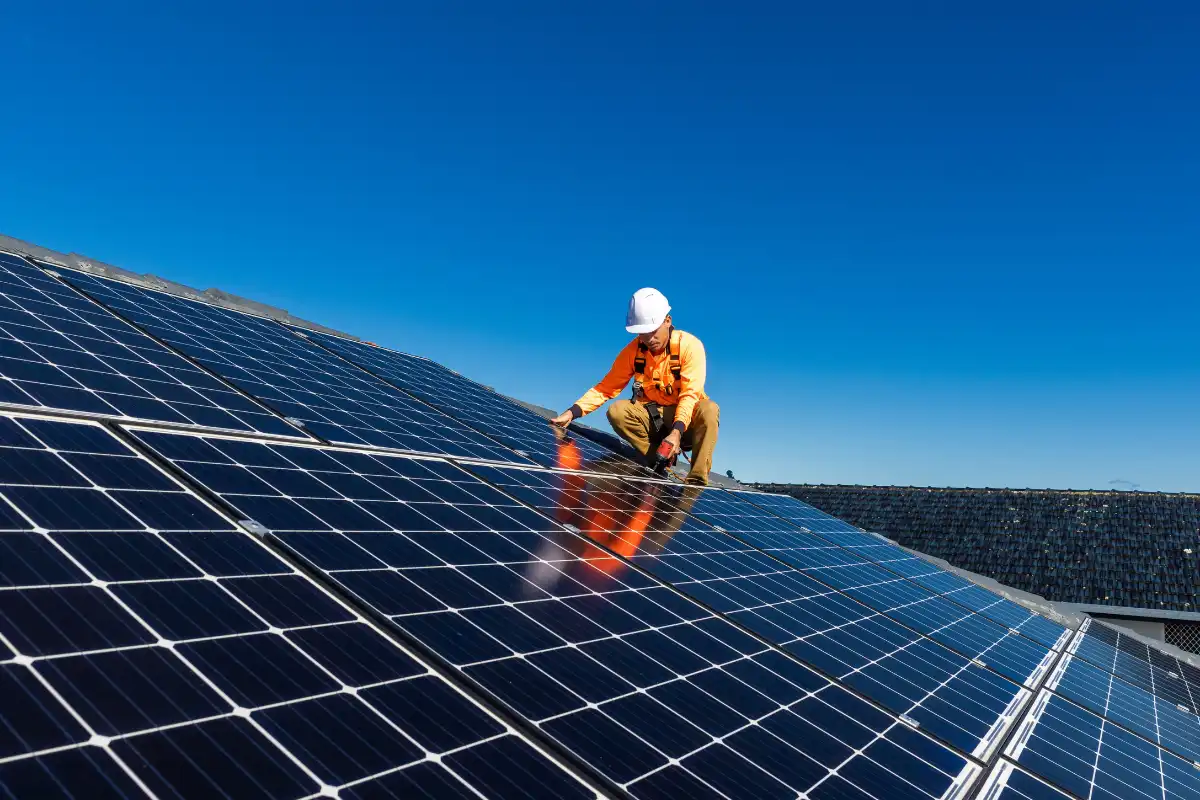
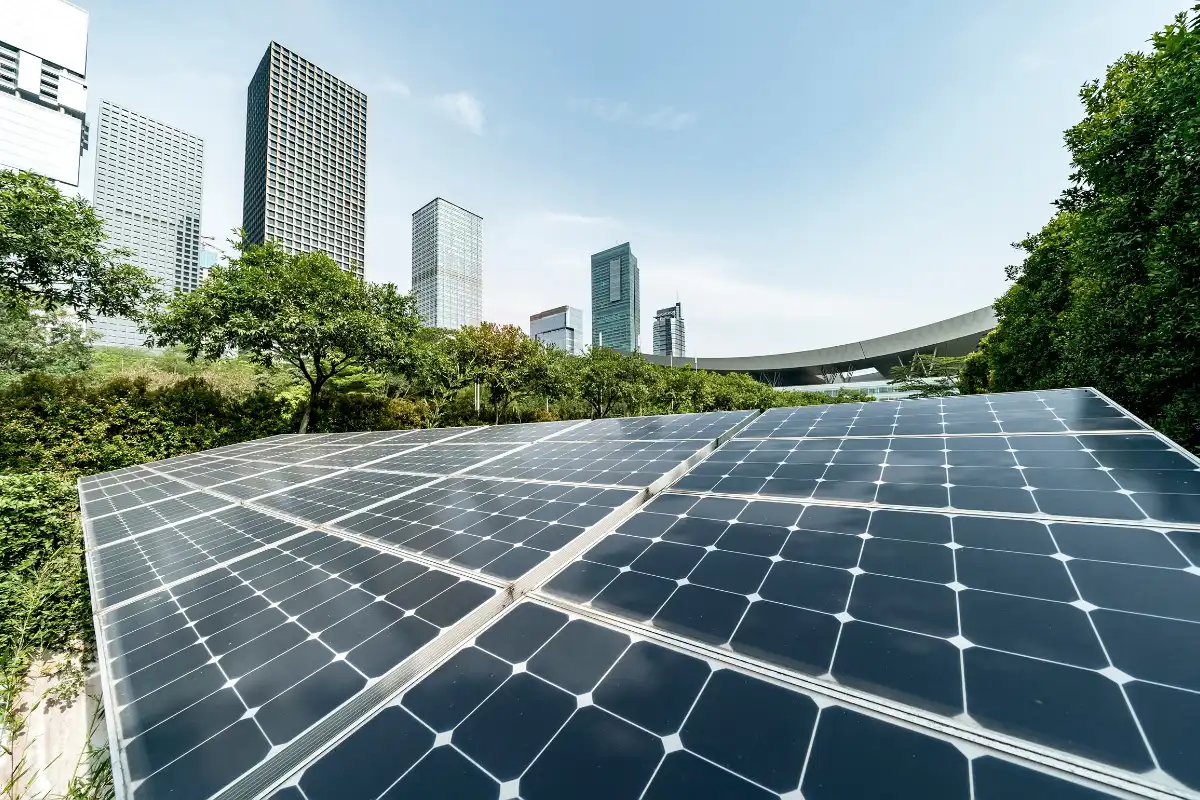
To stop worrying about electricity in your household, the ideal solution is solar panels with batteries and an inverter, considered one of the most modern options.
Their impact is significant, and the whole system works like this:
- Solar panels produce direct current (DC) during the day, straight from the roof of the house.
- The inverter converts DC into stable alternating current (AC) at 230 V, independent of the external grid.
- Batteries store surplus energy and provide power even when there is no sun or when the external grid is unstable.
- In hybrid systems, energy is used preferentially from solar sources, with the grid used only when necessary.
As you can see, a solar system this way not only saves money and energy but also protects appliances from grid fluctuations, extends their service life, and provides complete control over consumption.
Voltage drop at home is more than a technical issue. It is a clear signal that the power supply needs to be changed and modernised.
Whether through simple corrections to the wiring, the installation of stabilisers, or by introducing a solar system with batteries and an inverter, the goal is to achieve stable, safe, and efficient electricity consumption.
If you need a long-term solution that also brings savings and energy independence, solar panels are the best ally in the fight against voltage drop and high bills.