
Energy efficiency and sustainability have become key factors in daily life, and more and more households are considering the switch to renewable energy sources. In line with this, solar energy takes centre stage. One of the most common questions, however, is whether an entire house can really be heated by solar panels during winter days.
If you're considering the question of heating with solar energy, stick with us to find out all the technical, economic, and practical aspects that are important for making a decision about this type of heating.
Can a house be heated by solar energy?
Yes, a house can be heated solely by solar energy, and there are two types of such heating, using solar collectors and using solar panels.
Read on for details about both heating approaches.
How does solar heating work?
As we mentioned, household solar heating can be implemented in two basic ways:
1. Using solar collectors
Solar collectors have absorbers that absorb the sun's heat, which they then transfer to a liquid circulating through the system. This hot liquid is used to heat water in a boiler or to power an underfloor heating system or radiators. Once the liquid has been sufficiently heated, it is transferred to a tank from which it is used to heat the rooms.
The operation can be like standard heating, where the warm liquid heated in the collectors rises and the cooler one descends, or through an active system that uses a pump to move the liquid.
2. Using solar panels
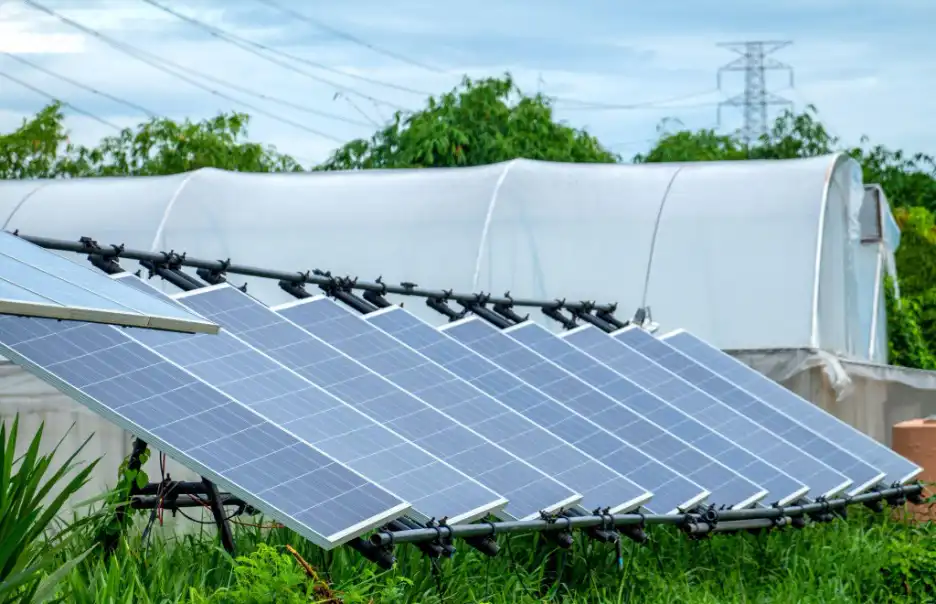
Solar panels produce electricity that is used to power electrical appliances, including electric heating systems such as heat pumps, heaters, or boilers.
How much energy is needed to heat a whole house?
For solar energy to be efficient at heating, it is important to properly assess the energy needs of the building. The assessment should include:
-
Insulation of the building: a well-insulated house consumes significantly less energy, which is why houses with well-sealed joinery and good interior and exterior wall insulation will have a major advantage and savings.
-
The surface area of the heated space: it isn't the same to heat a smaller or larger floor area; the height and length of the rooms are also taken into account.
-
The number of sunny days per year: it makes a big difference whether you live in a climate with many sunny days a year, or in one with more cloudy days.
-
The efficiency of energy conversion and storage equipment: it's extremely important which solar heating products you choose and whether you have professional installation, because only quality solar panels or collectors and professional implementation can ensure peace of mind and full-capacity heating.
What are the advantages of heating a house with solar energy?
-
Free energy after the initial investment
-
Reduced costs for electricity or heating
-
Less impact on the environment (no CO₂ emissions)
-
Greater energy independence for the household
-
The possibility of subsidies and recouping the investment over the years
-
Comfort of use (no burning, no fuel preparation, no smells, no gases)
What are the limitations of heating a house with solar energy?
Alongside all the benefits that solar heating brings, the limitations should also be considered.
A solar system requires a higher initial investment, but over the years that investment becomes economically more profitable than many other heating options.
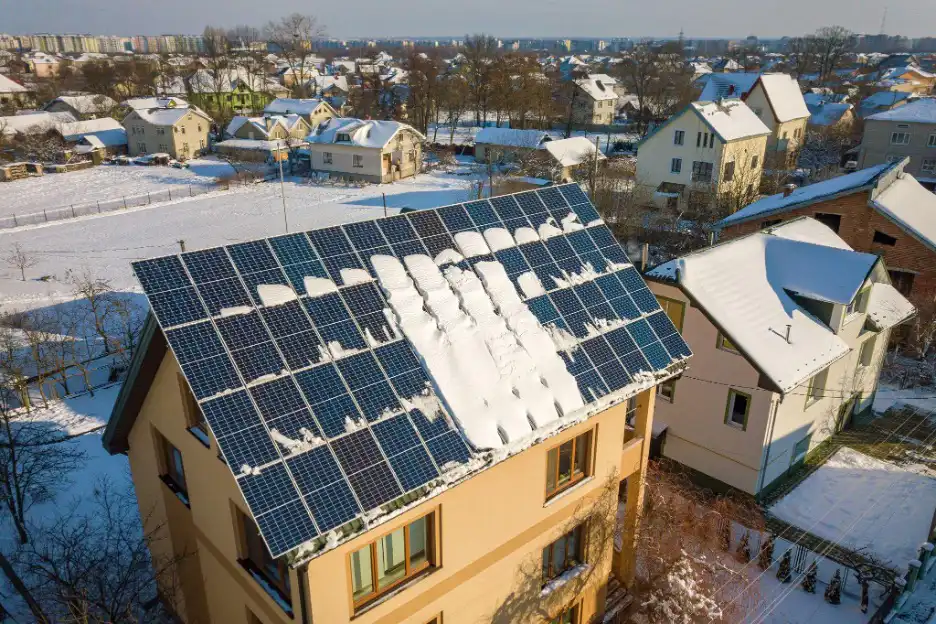
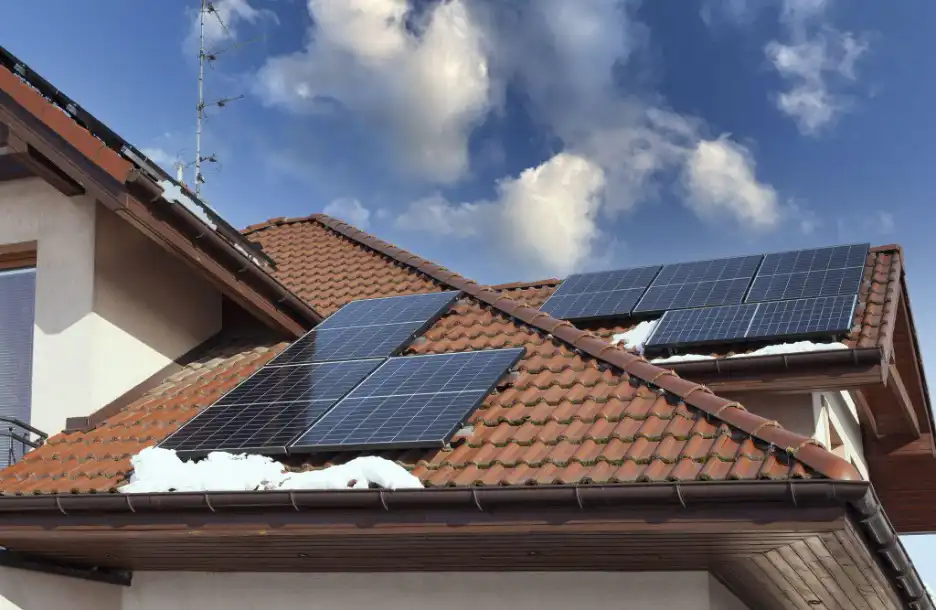
On the other hand, there is dependence on weather conditions, so in extreme winter conditions, snow can cover the panels and block light, while on cloudy and overcast days, energy production is significantly lower. That's why batteries are the best solution, during sunny days they collect all available energy and save it for cloudy days.
Also, for a solar system that will produce enough energy, a significant roof or land area is required. That's why it's no surprise that factories, warehouses, farms, and companies with larger business spaces are primarily the ones opting for this method of heating.
Is a solar system alone enough for heating throughout the entire winter?
Yes, with the right specifications and professional assessment, a solar system can be sufficient as the sole source of heating throughout the winter. However, in continental regions with long, cold winters, it's rare for any household solar system to independently meet 100% of the heating needs through winter. That's why in regions with insufficient sunny days, it is common to use a hybrid system, solar energy as the primary source, with an auxiliary system (electric boiler, pellet stove, heat pump) as a backup.
For a serious solar heating system, professional analysis is essential. The following factors are taken into account:
-
Location and climatic conditions (number of sunny hours per year)
-
Thermal insulation of the house (whether windows, the roof, and walls are well insulated)
-
Type of heating system that will use solar energy (heat pump, underfloor heating)
-
Household needs (number of members, energy consumption habits)
Without proper calculation, the system can be too weak (insufficient heating) or too expensive (surplus energy that isn't used).
How much does a solar heating system for a single house cost?
The factors that determine the price include all the above, but roughly it can be said that:
-
A 5 to 10 kW photovoltaic system costs from €5,000 to €10,000
-
A heat pump for heating costs from €3,000 to €6,000
-
A battery system for energy storage costs €3,000 and more
With available state subsidies, the price can be significantly reduced, and the investment is recovered on average in 7 to 12 years.
Investing in solar heating during winter can reduce household costs and significantly increase the property's value. Beyond the financial aspect, the environmental moment is also important, the switch to clean, renewable energy contributes to the global fight against climate change.